
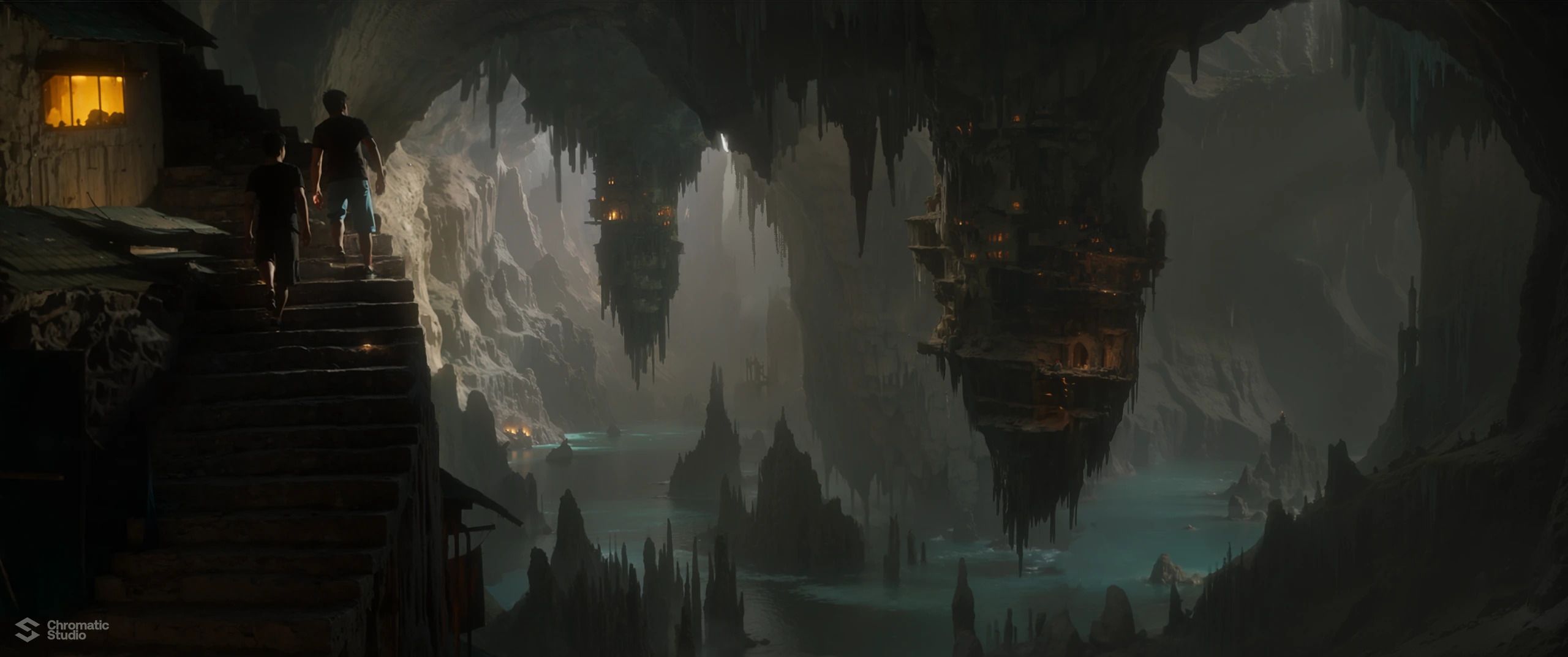
At Chromatic Studio, visual storytelling is at the core of everything we do. Whether we are working on a game, a film, or an animation, the challenge is always the same: how do you make someone feel something from a single image?
Make the viewer feel something
A strong image does not just show a scene, it makes the viewer feel it. Cinematography, composition, lighting and color work together to create a visceral response before the brain has time to process the details.Every choice, where the light falls, how saturated the palette is, where the eye lands first, is a deliberate storytelling decision made in close collaboration with the client. Equally important is the space the story takes place in. A well-composed architectural layout does more than look interesting, it suggests movement, history, and scale. When an environment feels physically real, the story inside it becomes immediately more convincing.
Build a world worth exploring
The larger themes pull the viewer into the world. The smaller details keep them there. A coat of paint peeling in the right place, a symbol repeated across different surfaces, an object that does not quite belong. These are the things that reward a second look and build genuine investment. Not everything needs to be shown either. Foreshadowing an event or revealing its aftermath rather than the event itself can suggest conflicts that extend far beyond the picture frame. It is an approach we rely on regularly when developing worlds that need to feel lived-in from the very first image.
Develop a distinct visual identity
Generic choices produce forgettable images. Being specific with silhouettes, materials, proportions and color relationships gives a project a look and feel that is immediately recognizable. Style is not decoration, it is identity. One of the first things we align on with any new production is establishing that visual language early, so every asset that follows feels like it belongs to the same world. The most enduring images also have one clear idea at their center, a focal point strong enough to stay with the viewer long after the image itself is gone.
Think beyond the single frame
A single image captures a moment. A sequence tells a story. Thinking across multiple frames, how one image leads into the next, what changes and what stays the same, opens up narrative possibilities no single keyframe can achieve alone. At Chromatic, some of our most rewarding work happens at this stage, when characters, architecture, vehicles and creatures all come together in one scene and worldbuilding reaches its full potential. Balancing all of these elements without losing clarity or focus is one of the hardest challenges in visual development, and one of the most satisfying when it lands.